

Practical Video 01
An insight into technical diagnostics

Professional diagnostics starts with the symptoms and ideally ends with a clear, evidence-based technical finding. Diagnostic data, measured values and, where necessary, electrical signals are assessed together.
Vehicle diagnostics involves more than reading fault memory. Diagnostic systems combine control unit data and vehicle functions and, where supported, allow analysis of data-bus communication. This provides a technical basis for further fault-finding.
Why modern vehicles rely on networked control units and how communication faults affect diagnostics.
What diagnostic systems can do and why technical root-cause analysis may need to go beyond the stored fault code.
Make electrical signals visible, compare them and assess them under real operating conditions.
Depending on the vehicle and symptoms, diagnostics may involve several levels. Fault memory and live data are the starting point; measurements and signal analysis help narrow down the cause when necessary.
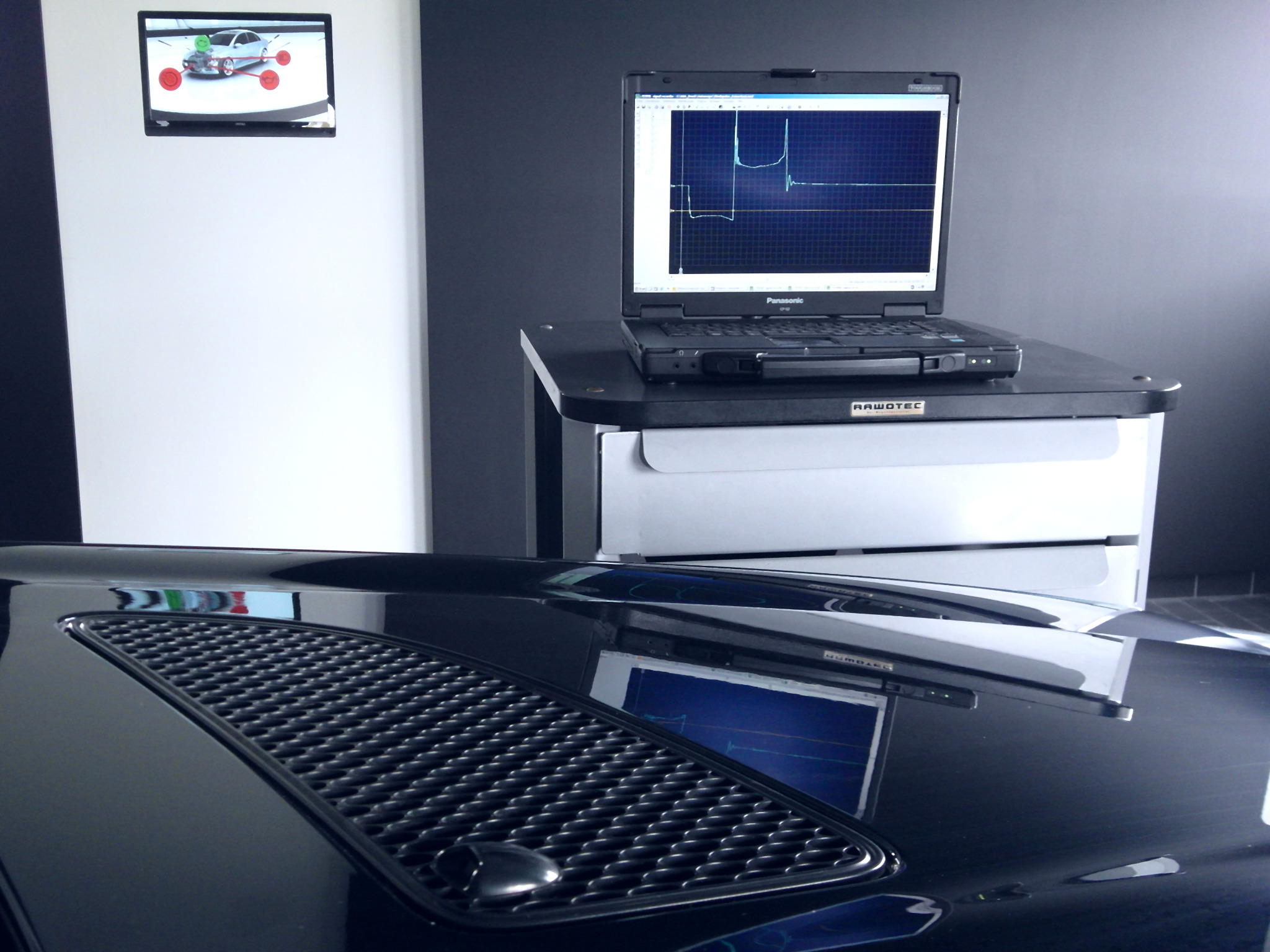
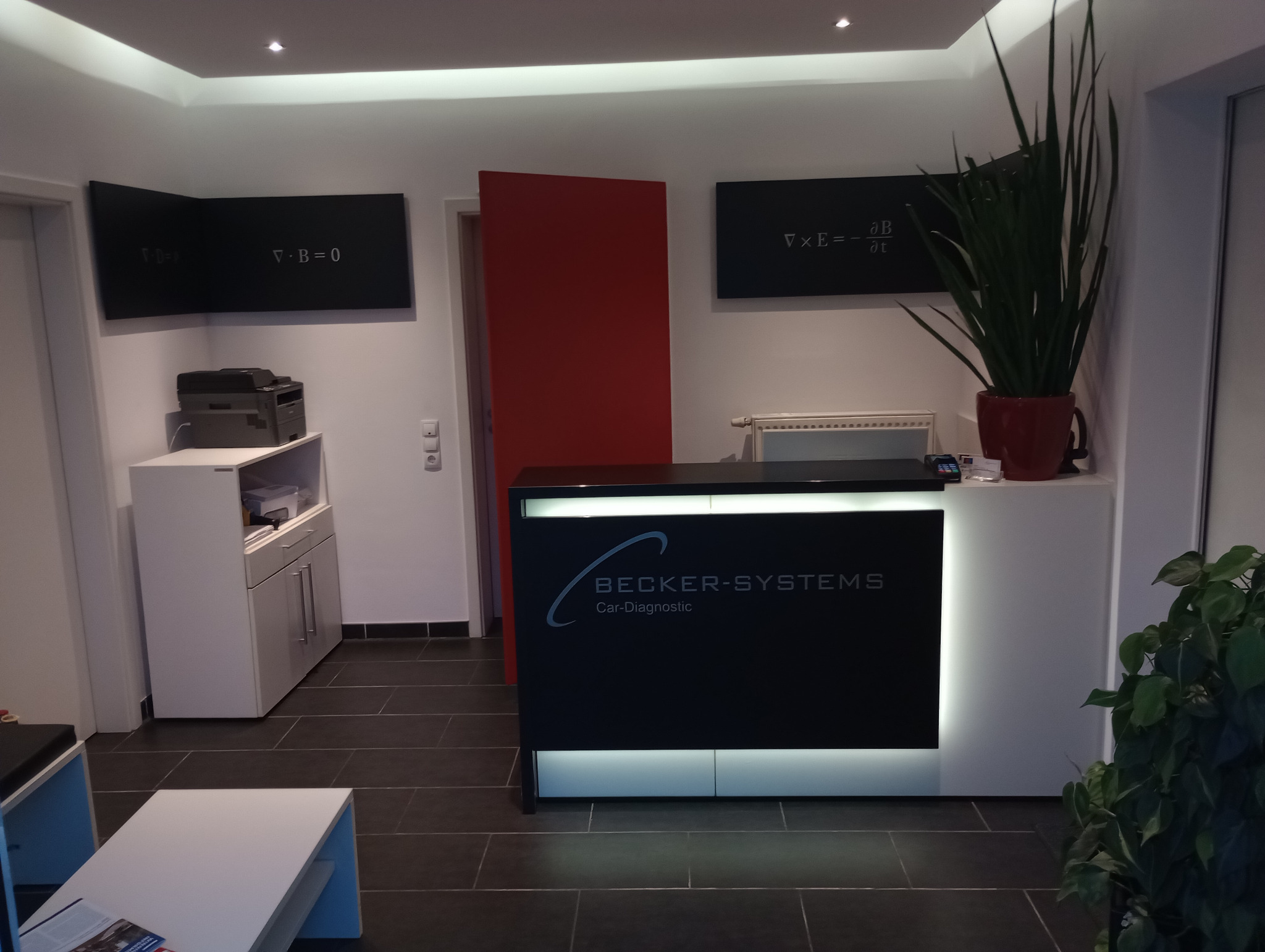
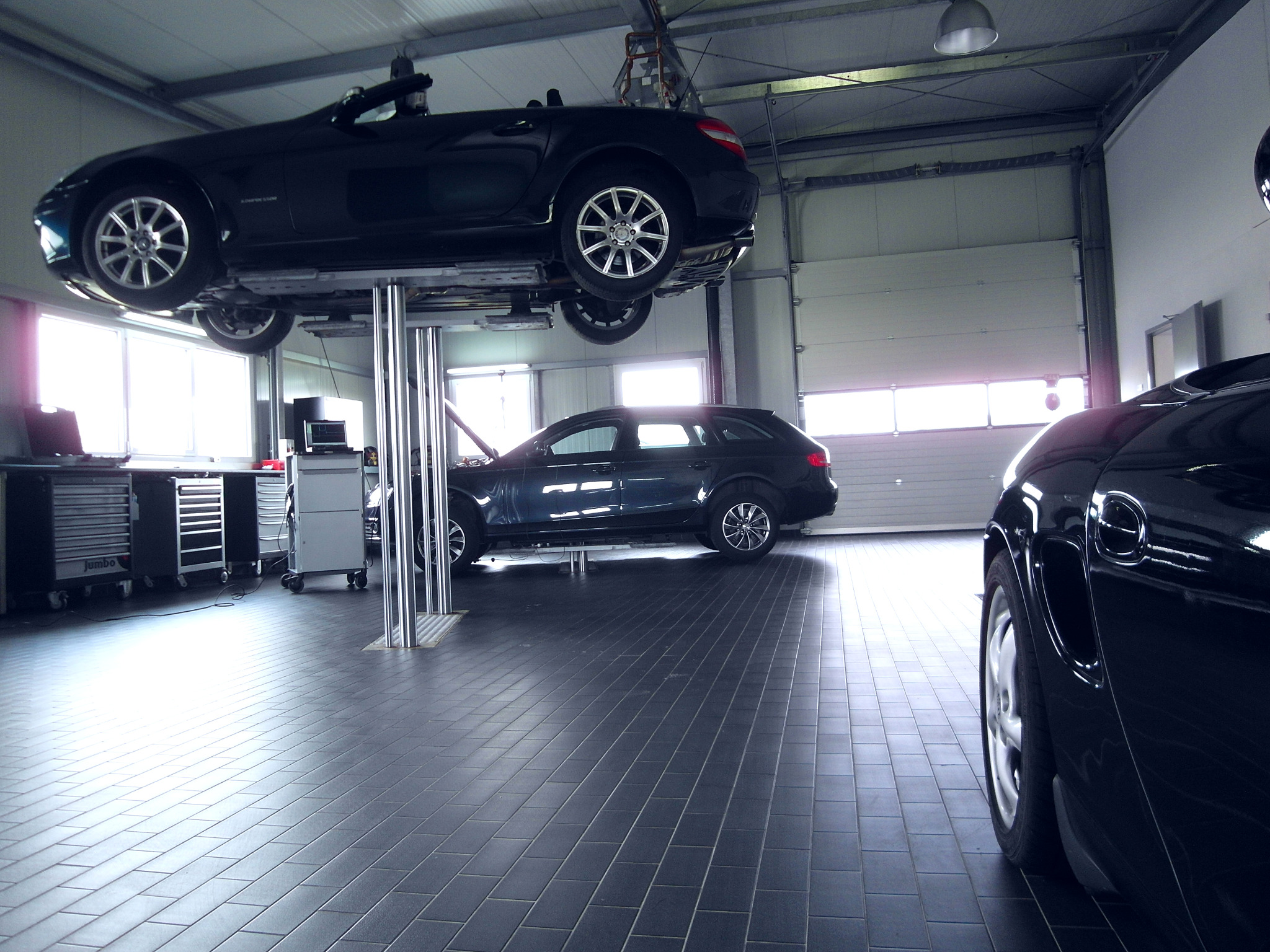
Depending on the vehicle, OEM diagnostic systems and multi-brand diagnostic tools are used. These include, among others, Mercedes-Benz XENTRY, BMW ISTA and Volkswagen Group ODIS. The diagnostic approach depends on the vehicle, the system and the symptoms.
OEM systems often provide the most detailed vehicle-specific information. If guided diagnostics is not sufficient, it is supplemented by independent technical testing.
A modern vehicle is a networked system: control units exchange information, sensors provide status data and actuators carry out commands. A fault code may identify an affected area, but it does not automatically determine the root cause.
A stored fault code is an important clue, but it can have several possible causes: a sensor may be defective, its power supply may be missing, a wire may be open-circuit, or communication between control units may be disrupted.
Fault codes, live data, system responses and vehicle behaviour are therefore compared. Reliable diagnostics combines system knowledge, measured values, electrical testing and observation of the vehicle in operation.
When diagnostic information alone is insufficient, direct measurement of electrical signals can be decisive. An oscilloscope reveals waveforms, frequencies, signal levels, timing relationships and deviations from expected behaviour.
The relevant factors are not only individual voltage readings, but also waveform shape, frequency, timing and behaviour under load. Measurements can be compared with expected system behaviour and the actual symptoms.
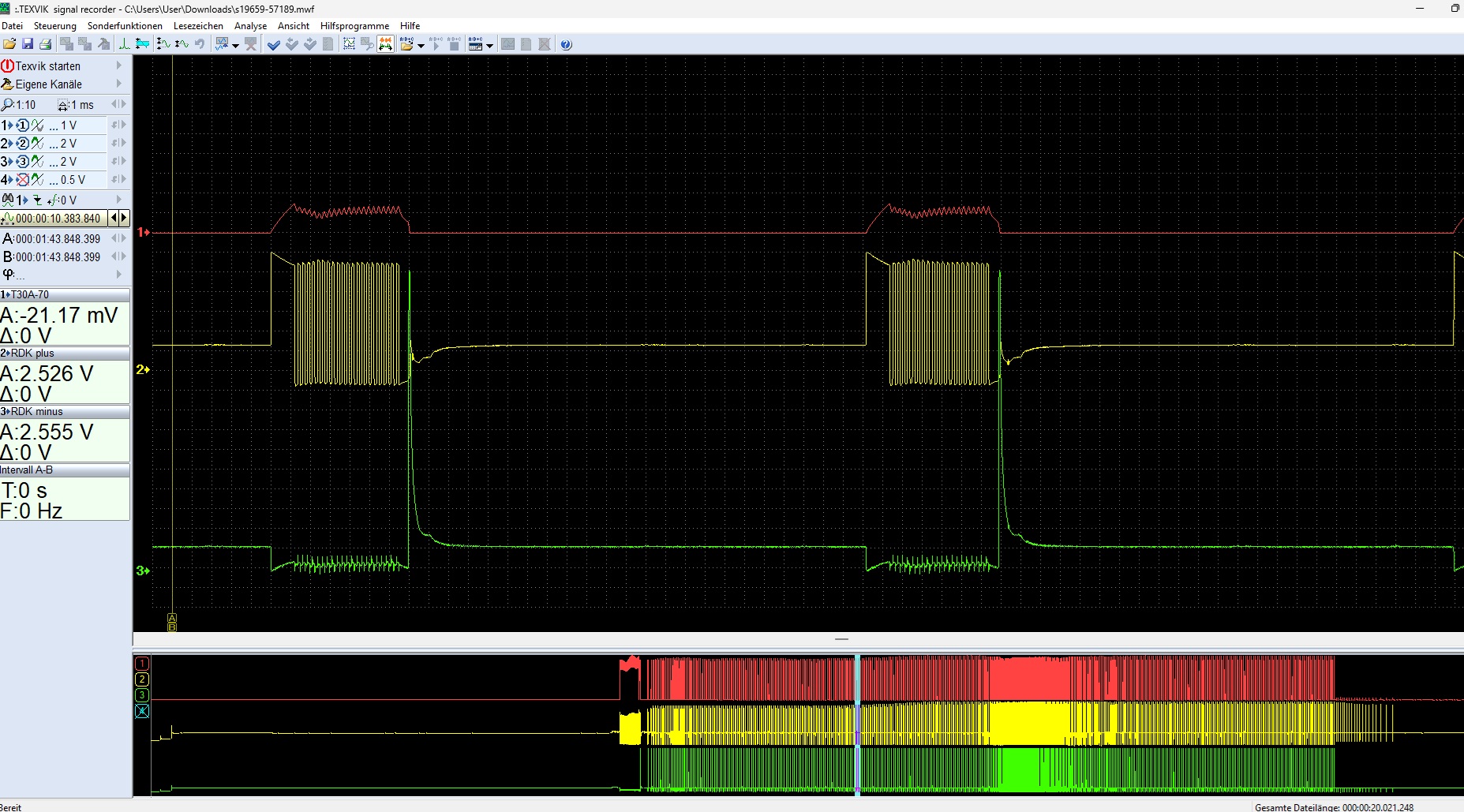
Modern vehicles contain many networked control units. CAN, LIN, MOST, FlexRay and other communication networks may be relevant to diagnostics.
Faults do not necessarily originate in the control unit that reports them. Communication faults, power-supply issues or breaks in the wiring network can cause secondary faults in several systems. Communication analysis is therefore an important part of technical diagnostics.
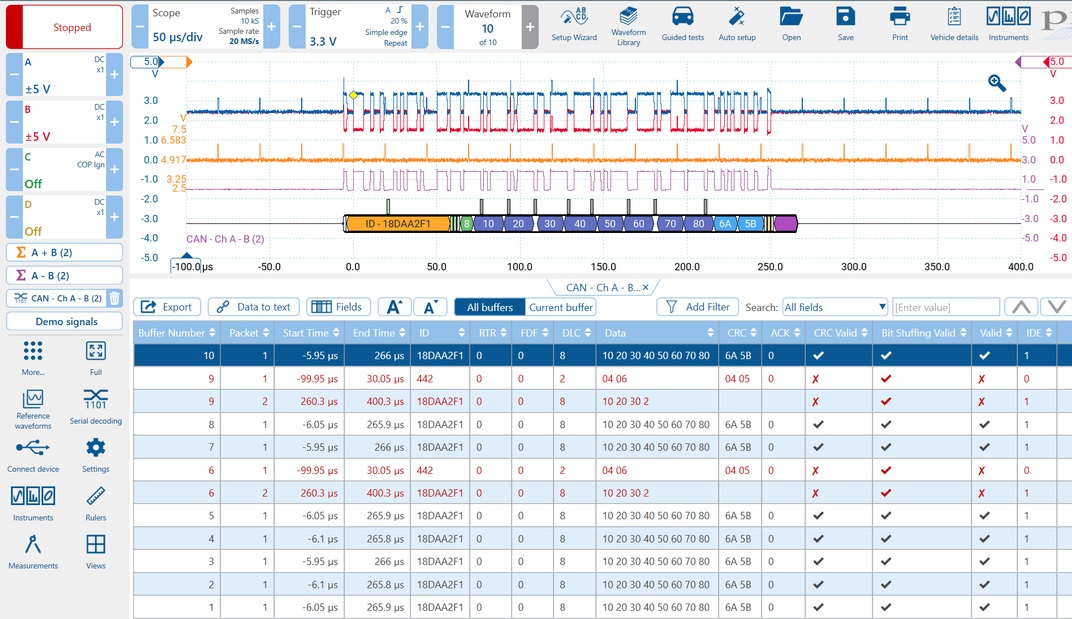
Findings from diagnostic tools, measurements and practical testing are assessed together. The aim is not to replace as many parts as possible, but to narrow down the root cause sufficiently to determine a sound repair strategy.
Record symptoms, history and operating conditions.
Analyse fault memory, live data and system information.
Verify signals, wiring, sensors and components.
Combine the results and establish a technical finding.
Practical videos on the BECKER-SYSTEMS YouTube channel show what technical diagnostics and fault-finding look like in real situations.
An insight into technical diagnostics
Measurement and fault-finding in practice
Diagnostics and Technical Root Cause Analysis
The different price tiers provide a transparent overview of the diagnostic services included in each package.
| No. | Diagnostics in Detail | Price |
|---|---|---|
| 1 | Read and Clear Fault Codes“Could you just have a quick look?” | €35.00 |
| 2 | Fault Memory and Live Data DiagnosticsDifferential diagnosis and recommended corrective action | €75.00 |
| 3 | Comprehensive DiagnosticsFault memory, live data, differential diagnosis, systems analysis, sensor and actuator measurements, CAN analysis, wiring-harness testing and root-cause identification | 1€75.00 |
| 4 | As in Package 3With Additional Mechanical Diagnostics | €250.00 |
| 5 | As in Package 4Including Microelectronics / Control Unit Diagnostics | €325.00 |
| 6 | General Electronics WorkHourly Rate | €95.00/h |
| 7 | Electronics LaboratoryLaboratory Hour | €150.00/h |