High-Voltage System
Safe work starts by verifying the status of the High-Voltage System and following the relevant manufacturer instructions.

As powertrains become increasingly electrified, the requirements for diagnostics, Measurement Technology and safety are changing too. BECKER-SYSTEMS has incorporated this field into its technical development from an early stage.

BECKER-SYSTEMS has successfully completed further training in working safely on high-voltage vehicles. This provides the technical qualification to safely de-energise High-Voltage Systems in electric and hybrid vehicles in accordance with manufacturer instructions and to prepare the vehicle for the required work.
On modern vehicles, safely isolating the High-Voltage System is only one part of the task. Structured diagnostics, assessment of system status and an understanding of the interactions between the High-Voltage System, control units, communication networks and conventional vehicle electrics are equally important.
For electric and hybrid vehicles, the key question remains the same: what is the actual cause of the complaint? Measured values, signals, control units and electrical relationships must be considered together.
Safe work starts by verifying the status of the High-Voltage System and following the relevant manufacturer instructions.
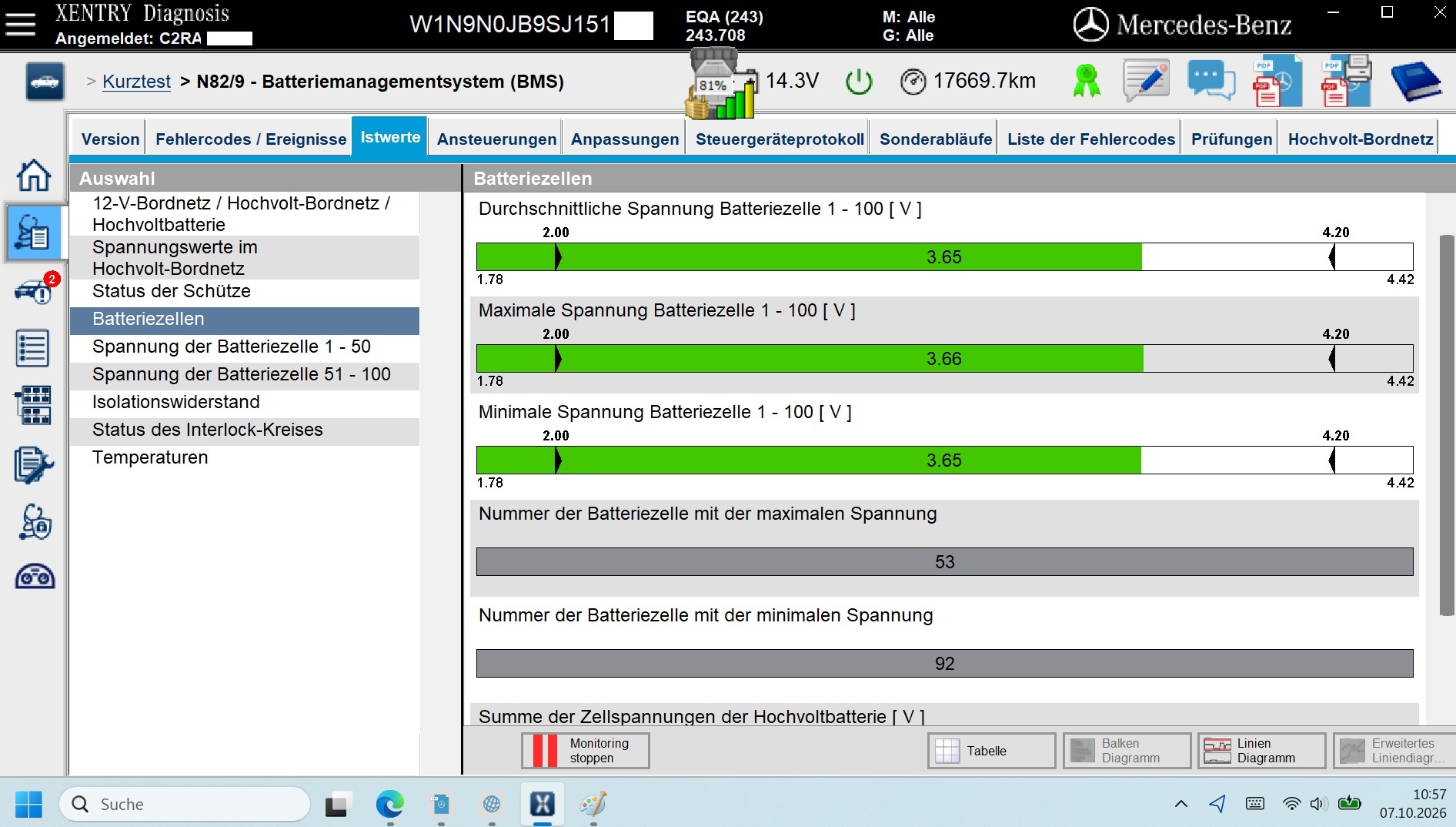
Fault memory, live data, actuator tests and system information help narrow down faults systematically.
When diagnostic information alone is insufficient, electrical signals and measurements provide additional insight.
Even in electrified vehicles, control units, communication networks and electronic assemblies remain key areas of diagnosis.
Increasing electrification makes it even more important to combine diagnostics with Measurement Technology. A stored fault code is a clue, not necessarily the root cause.
Using OEM diagnostic systems, multi-brand diagnostic tools and specialised measurement equipment, technical relationships can be verified and signals analysed precisely. This reflects the principles of logical diagnostics that have guided BECKER-SYSTEMS for many years.
More about vehicle diagnostics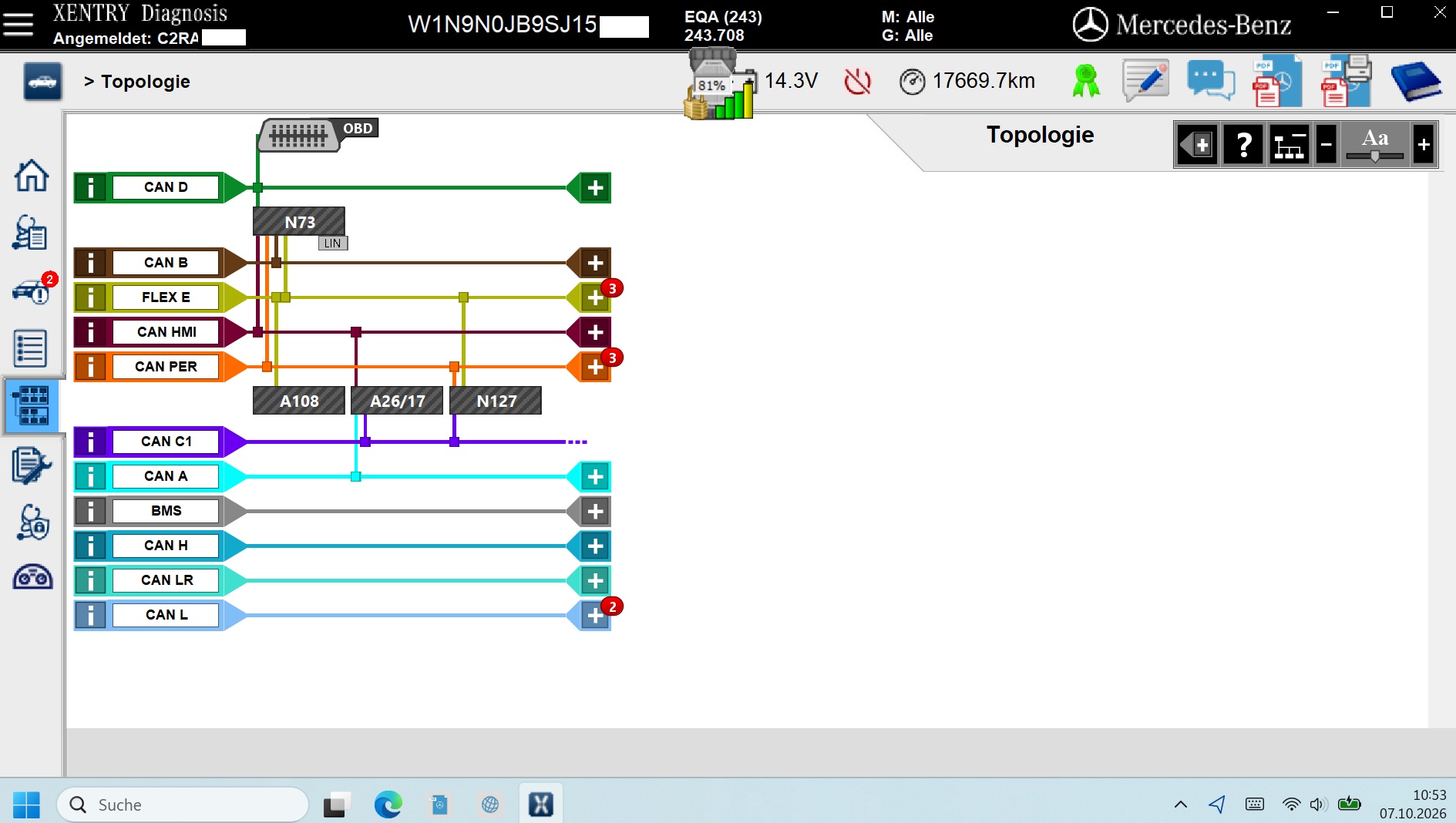
Electrification adds technical and safety-related layers to conventional vehicle diagnostics. Diagnosis therefore starts not just with fault memory, but with an understanding of the entire high-voltage and low-voltage systems.
Electric and hybrid vehicles use a High-Voltage System for their drivetrains. Before any technical work is carried out, the system status must be assessed in accordance with the vehicle manufacturer’s instructions and, where required, the system must be safely de-energised. This is a key difference from conventional diagnostics on a standard 12- or 24-volt vehicle electrical system.
For BECKER-SYSTEMS, the appropriate technical qualification for working safely on high-voltage vehicles is therefore an essential part of the work, alongside diagnostics itself. The completed training covers the safe de-energisation of electric and hybrid vehicles in accordance with manufacturer instructions.
Technisch betrachtet ist ein Elektrofahrzeug keineswegs „einfacher“, nur weil der Verbrennungsmotor entfällt. An die Stelle vieler klassischer Antriebskomponenten treten unter anderem high-voltage batteries, battery management, power electronics, electric motors, high-voltage contactors, insulation monitoring, and charging and thermal management.
Diese Systeme stehen über Fahrzeugnetzwerke und control units miteinander in Verbindung. A fault may therefore become visible in a different part of the system from where its actual root cause lies. This is where the logical diagnostics approach comes in: fault memory, live data, communication data and electrical measurements are considered together. This reflects the fundamental diagnostic approach used by BECKER-SYSTEMS.
Fault codes and warning messages must be considered in relation to battery condition, state of charge, temperature, power supply and communication status.
Depending on the symptoms, voltages, currents, signals, wiring, switching states and communication sequences can provide important clues to the actual root cause.
The conventional onboard electrical system remains essential even in electric vehicles. control units, communication and many vehicle functions still depend on a stable low-voltage supply.
In complex electrical systems, a stored fault does not automatically mean a component is defective. Structured diagnostics helps distinguish root causes from consequential faults.
For electric and hybrid vehicles, the aim is not simply to read fault memory. The goal is to build a technically coherent picture from the available information. Original diagnostic systems, measuring instruments and oscilloscopes work together to provide insight beyond an individual fault code.